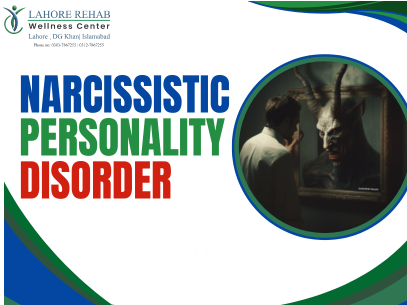
The term “narcissist” is often used in everyday conversation to describe someone who seems a bit self-absorbed or vain. But in the realm of mental health, Narcissistic Personality Disorder (NPD) is a serious and complex condition that goes far beyond simple vanity. It is a long-term pattern of abnormal thinking, functioning, and behaving that causes significant distress and impairs a person’s life.
At Lahore Rehab & Wellness Center, we believe that understanding a disorder is the first step toward addressing its profound impact, both on the individual with NPD and on those around them. This blog aims to demystify NPD, exploring its signs, underlying causes, and the crucial pathways to management and healing.
Narcissistic Personality Disorder is a mental condition characterized by a pervasive pattern of grandiosity, a constant need for admiration, and a profound lack of empathy for others. This isn’t just a personality quirk; it’s a deeply ingrained way of interacting with the world that masks a fragile sense of self-esteem. Behind the facade of extreme confidence often lies a vulnerability that is sensitive to the slightest criticism.
According to the Diagnostic and Statistical Manual of Mental Disorders (DSM-5), a diagnosis of NPD requires the presence of at least five of the following traits:
While the above symptoms paint a broad picture, NPD often manifests in two primary subtypes:
The exact cause of NPD is unknown, but it is widely believed to be a result of a complex interplay between:
Living with or loving someone with NPD can be emotionally draining. Relationships are often characterized by a cycle of idealization (being put on a pedestal) and devaluation (being torn down), leading to confusion, self-doubt, and trauma for the partner, family members, and friends.
Is Treatment Possible?
One of the biggest challenges with NPD is that individuals rarely seek help for the disorder itself, as they often do not believe anything is wrong with them. They are more likely to seek therapy for co-occurring issues like depression, anxiety, or substance abuse.
However, treatment, particularly specialized psychotherapy like Cognitive Behavioral Therapy (CBT) or Dialectical Behavior Therapy (DBT), can be beneficial. The goals of therapy are not to “cure” NPD but to help the individual:
If you are in a relationship with someone with NPD, your healing is paramount. Seeking therapy for yourself is crucial. A therapist can provide validation, help you rebuild your self-esteem, establish healthy boundaries, and develop strategies to protect your mental and emotional well-being.
Navigating the complexities of Narcissistic Personality Disorder is challenging, but you do not have to do it alone. At Lahore Rehab & Wellness Center, our compassionate and experienced therapists provide support for individuals struggling with personality disorders and for those affected by them.
Take the first step toward understanding and healing. Contact us for a confidential consultation at our branches:
📍 PIA Road Branch, Lahore
📍 NAWAB Town Branch, Lahore