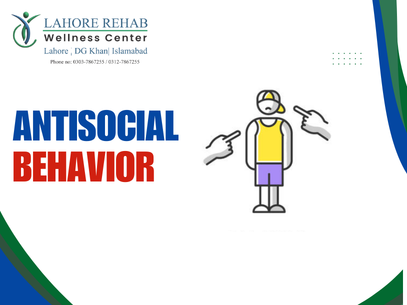
Antisocial behavior is a term that often evokes strong reactions—fear, judgment, or misunderstanding. At Lahore Rehab & Wellness Center, we approach this topic with a commitment to understanding its complexities. Antisocial behavior exists on a spectrum, ranging from occasional rule-breaking in adolescence to a persistent pattern of disregard for others that characterizes Antisocial Personality Disorder (ASPD) . Understanding its roots, manifestations, and treatment options is essential for fostering compassion and effective intervention.
Antisocial behavior refers to actions that harm, disregard, or violate the rights of others. It encompasses a wide range of conduct, including:
When these behaviors become a pervasive, long-term pattern beginning in adolescence or early adulthood, they may indicate Antisocial Personality Disorder. Individuals with ASPD often demonstrate a profound lack of empathy, manipulative tendencies, impulsivity, and an inability to conform to social norms.
It’s crucial to understand that not all antisocial acts indicate a personality disorder. Many adolescents exhibit some oppositional or rule-breaking behavior as part of normal development. The key distinction lies in pervasiveness, persistence, and context.
Antisocial behavior does not emerge in a vacuum. Research points to a complex interplay of factors:
1. Genetic and Biological Factors:
2. Environmental Influences:
3. Psychological Factors:
Antisocial behavior exacts a heavy toll. For the individual, it often leads to:
For families and communities, the effects include emotional trauma, financial loss, and a pervasive sense of unsafety. Breaking this cycle benefits everyone.
This is perhaps the most important question. While ASPD is considered one of the more challenging conditions to treat, change is possible—particularly with early intervention and intensive, tailored approaches.
Effective therapeutic approaches include:
Medication may be used to manage co-occurring conditions like depression, anxiety, or impulsivity, but there is no medication that directly “cures” ASPD.
Treatment success depends heavily on the individual’s motivation. Those coerced into treatment (by courts or family) often show poorer outcomes initially, but skilled therapists can work to build internal motivation over time. Structured environments with clear, consistent consequences and rewards are most effective.
While antisocial behavior presents significant challenges, it is essential to remember that human beings are capable of change. The brain retains plasticity throughout life. With the right combination of intensive therapy, support, and often a structured environment, individuals can learn to regulate emotions, develop empathy, and build a life that does not harm others.
For families, support is equally critical. Loving someone with antisocial traits is exhausting and often painful. Family therapy and support groups provide tools for setting boundaries, protecting one’s own mental health, and fostering whatever positive change is possible.
If you or a loved one is struggling with patterns of antisocial behavior, specialized help is available. At Lahore Rehab & Wellness Center, our experienced team provides comprehensive assessment and evidence-based treatment tailored to the individual’s needs. We believe in the possibility of change and are committed to supporting that journey with compassion and expertise.
Contact us today for a confidential consultation.
📍 PIA Road Branch, Lahore | 📍 Nawab Town Branch, Lahore | 📍 Dera Ghazi Khan Branch