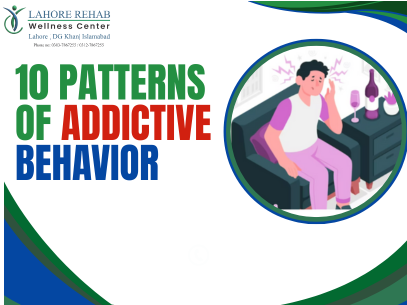
Addiction is a complex and cunning disease. It rarely announces itself with a clear, single symptom. Instead, it weaves itself into the fabric of a person’s life through a series of behavioral patterns that gradually become the new normal. Whether it’s a substance like drugs or alcohol, or a behavior like gambling or gaming, the underlying patterns are often strikingly similar.
At Lahore Rehab & Wellness Center, we believe that awareness is the first step toward healing. Recognizing these patterns in yourself or a loved one is not about assigning blame, but about identifying a treatable health condition. Here are 10 common patterns of addictive behavior that signal it may be time to seek help.
This is the hallmark of addiction. What begins as a choice becomes a compulsion. An individual may set strict limits for themselves—”I’ll only have one drink” or “I’ll only game for an hour”—but consistently find themselves unable to stop once they start. The behavior continues far beyond the original intention, leading to excessive use or engagement despite the desire to quit or cut down.
The mind becomes dominated by the object of addiction. A person may spend a significant amount of time thinking about the substance or behavior, planning how to get it, reminiscing about past use, and anticipating the next opportunity. This mental obsession often manifests as intense cravings, which are powerful urges that can be difficult to resist without professional coping strategies.
As the addiction takes center stage, other areas of life begin to suffer. This can manifest as:
When the substance or behavior is stopped, the body and mind react negatively. Withdrawal symptoms are a clear sign of physical and psychological dependence. These can range from anxiety, irritability, and nausea (common with alcohol and opioids) to restlessness, depression, and intense cravings (common with stimulants and behavioral addictions).
Over time, the body adapts. The same amount of a substance or the same duration of a behavior no longer produces the desired effect. This leads to a dangerous pattern of escalation—needing more alcohol to feel a buzz, making larger bets to feel the same rush, or spending more hours gaming to achieve satisfaction. Tolerance drives the addiction to progressively more severe levels.
Perhaps one of the most baffling aspects to outsiders is this pattern. The individual continues the addictive behavior even when they are fully aware of the severe harm it is causing. This includes:
Hobbies, social events, and passions that were once a source of joy are cast aside. The addiction becomes the primary, and often only, source of pleasure or relief. This social withdrawal isolates the individual and makes their world increasingly smaller, revolving entirely around the addictive cycle.
To protect their addiction, individuals often engage in covert behaviors. This includes:
Addiction impairs judgment and lowers inhibitions, leading to dangerous decisions. This can include driving under the influence, having unprotected sex, using unsterilized needles, or engaging in illegal activities to obtain the substance or funds for the behavior.
The individual recognizes the problem and has made repeated, sincere efforts to stop or control their addictive behavior. These attempts often end in relapse, which leads to feelings of shame, hopelessness, and the false belief that they are incapable of recovery.
Recognizing these 10 patterns is not about creating a checklist for condemnation. It is about identifying the fingerprints of a disease that requires professional intervention. Addiction is not a moral failing; it is a chronic medical condition that affects brain function and behavior.
The presence of these patterns indicates that willpower alone is not enough. Recovery requires a comprehensive, multi-faceted approach that addresses the underlying psychological, physical, and social factors. At Lahore Rehab & Wellness Center, we specialize in creating personalized treatment plans that break these destructive cycles. Through evidence-based therapies like Cognitive Behavioral Therapy (CBT), group support, medical care, and wellness practices, we help individuals rebuild their lives from the ground up.
If you see these patterns in your own life or in someone you care about, it is time to take the next step. The compassionate team at Lahore Rehab & Wellness Center is here to provide the expert care and unwavering support needed for lasting recovery.
Your journey to wellness begins with a single conversation. Contact us today for a confidential assessment.
We are here for you at our three branches:
📍 PIA Road Branch, Lahore
📍 Nawab Town Branch, Lahore