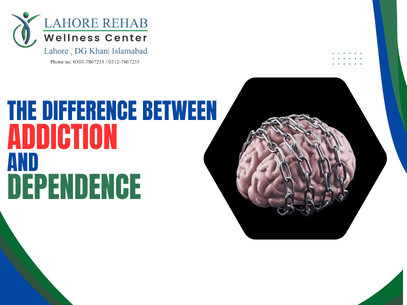
In conversations about substance use, the terms “addiction” and “dependence” are often used interchangeably. This confusion can lead to misunderstanding, stigma, and even barriers to proper treatment. At Lahore Rehab & Wellness Center, we believe that clear language leads to clear understanding. Distinguishing between addiction and dependence is not just semantics—it is essential for accurate diagnosis, appropriate treatment, and compassionate care.
Physical dependence occurs when the body adapts to a substance and requires it to function normally. When the substance is reduced or stopped, withdrawal symptoms emerge. These symptoms can range from mild (anxiety, nausea, sweating) to severe (seizures, delirium tremens) depending on the substance and duration of use.
Dependence is a predictable, biological response. It can happen to anyone taking certain medications as prescribed. For example, a patient using prescribed opioids for chronic pain or benzodiazepines for anxiety may develop physical dependence without ever misusing their medication. Their body has simply adapted to the presence of the drug. When they stop, they experience withdrawal—not because they crave the drug, but because their physiology needs time to readjust.
Key features of dependence include:
Addiction, clinically known as Substance Use Disorder, is a complex brain disease characterized by compulsive drug seeking and use despite harmful consequences. Unlike simple dependence, addiction involves psychological and behavioral components that fundamentally change how the brain’s reward system functions.
A person with addiction:
Addiction is not simply about the substance—it is about the relationship between the person and the substance. Two people can take the same drug at the same dose. One may develop addiction while the other only experiences dependence. The difference lies in behavior, not just biology.
For Diagnosis and Treatment
Mistaking dependence for addiction can lead to unnecessary or inappropriate treatment. A chronic pain patient experiencing withdrawal from prescribed opioids does not need addiction rehab. They need a medically supervised tapering plan. Conversely, failing to recognize addiction as a behavioral and psychological disorder means missing the core issues that drive compulsive use.
For Reducing Stigma
When people believe that anyone taking certain medications is “addicted,” they may avoid necessary treatment for fear of being labeled. This is particularly harmful for patients with chronic pain, anxiety, or ADHD who benefit from medications but worry about dependency. Accurate language reduces fear and encourages honest conversations with doctors.
For Families and Loved Ones
Understanding the difference helps families respond appropriately. Physical dependence without addiction does not require an intervention or rehab. Addiction without physical dependence (as seen in some behavioral addictions like gambling) still demands comprehensive treatment.
Yes. You can have physical dependence without addiction (a patient on prescribed opioids for pain). You can also have addiction without significant physical dependence (early stage substance use or certain behavioral addictions). Most commonly, however, chronic substance abuse leads to both—physical dependence alongside the psychological compulsion of addiction.
Physical dependence alone is treated through medically supervised tapering or detoxification. Addiction requires comprehensive treatment including behavioral therapy, counseling, relapse prevention planning, and often long-term support. For those with both, integrated treatment addressing both the physical withdrawal and the psychological drivers is essential.
Understanding the difference between addiction and dependence is not just academic—it is practical and compassionate. It allows for accurate diagnosis, appropriate treatment, and reduced stigma. If you or a loved one is struggling with substance use, a professional assessment can clarify what kind of help is needed. Recovery is possible, and it begins with understanding.
Whether you are facing physical dependence or full addiction, you don’t have to navigate it alone. At Lahore Rehab & Wellness Center, we provide expert assessment and personalized treatment plans to meet you where you are.
📍 PIA Road Branch, Lahore | 📍 Nawab Town Branch, Lahore | 📍 Dera Ghazi Khan Branch