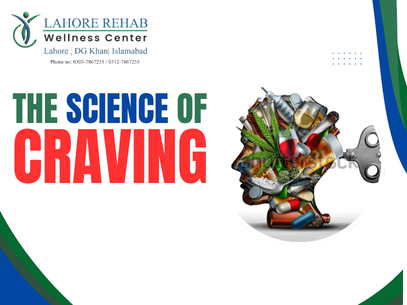
Cravings are one of the most powerful and challenging aspects of addiction recovery. They can strike suddenly, feel overwhelming, and make even the most determined individual feel powerless. At Lahore Rehab & Wellness Center, we help individuals understand that cravings are not a sign of weakness—they are a sign of a brain that has been rewired by substances. Understanding the science behind cravings is the first step toward managing them effectively.
A craving is an intense, often overwhelming urge to use a substance. It is not simply a desire or a thought; it is a physical and emotional experience that involves multiple brain regions, neurotransmitters, and memory systems. Cravings are driven by the brain’s reward system, which has been hijacked by repeated substance use.
At the center of craving is the brain’s reward system, particularly the dopamine pathway. Dopamine is a neurotransmitter associated with pleasure, motivation, and reinforcement. When you eat a good meal, spend time with loved ones, or achieve a goal, dopamine is released, reinforcing those behaviors.
Substances like drugs and alcohol artificially flood the brain with dopamine—sometimes up to 10 times more than natural rewards. This intense dopamine surge creates a powerful memory: “This feels amazing. Do it again.” Over time, the brain adapts by reducing its own dopamine production and reducing the number of dopamine receptors. The result? The individual needs more of the substance to achieve the same effect—a process known as tolerance.
Cravings are not just about chemistry; they are also about memory. The brain’s hippocampus and amygdala store memories and emotions associated with substance use. When a person encounters a trigger—a place, person, smell, or even a feeling—that is linked to past use, these brain regions activate the reward system. The memory of the “high” floods back, and the craving intensifies.
This is why a recovering individual can feel an intense urge simply by walking past a familiar bar or hearing a certain song. The brain has created a powerful neural connection between the trigger and the substance. Breaking this connection requires time, consistency, and conscious effort.
Stress is a major trigger for cravings. When the brain perceives stress, it activates the hypothalamic-pituitary-adrenal (HPA) axis, releasing cortisol and adrenaline. This “fight or flight” response prepares the body to react to threat. For individuals with addiction, the brain has learned that substances can quickly soothe this stress response. So, when stress rises, cravings often follow.
This is why individuals in recovery are often advised to avoid stressful situations and to develop healthy stress-management techniques like exercise, meditation, or breathing exercises.
Many individuals believe that if they just had more willpower, they could stop cravings. But cravings are not simply a battle of will. They are driven by brain changes that are beyond conscious control. The prefrontal cortex—the brain’s decision-making center—is weakened by addiction. The reward system, driven by dopamine and memory, overrides rational thought.
Willpower is like a muscle that gets tired. Relying solely on willpower to resist cravings is exhausting and often leads to relapse. Instead, recovery requires a combination of medication (when appropriate), therapy, social support, and practical strategies to manage cravings.
Cravings are a reality of recovery, but they are not a life sentence. With time, the brain begins to heal. The neural pathways associated with addiction weaken, and healthier patterns take their place. Understanding the science of craving—why it happens, how it works, and what you can do about it—empowers you to take control. You are not your cravings. You are capable of change.
If you or a loved one is struggling with cravings in recovery, you don’t have to face them alone. At Lahore Rehab & Wellness Center, we provide comprehensive support to help you understand, manage, and overcome cravings. Your journey to lasting sobriety begins here.
📍 PIA Road Branch, Lahore | 📍 Nawab Town Branch, Lahore | 📍 Dera Ghazi Khan Branch
0312-7867255
0303-7867255
042-32217633
Lahore Rehab Center